
How the World's Most Iconic Tool Brand Found $49 Million in Supply Chain Savings
Snap-on Incorporated
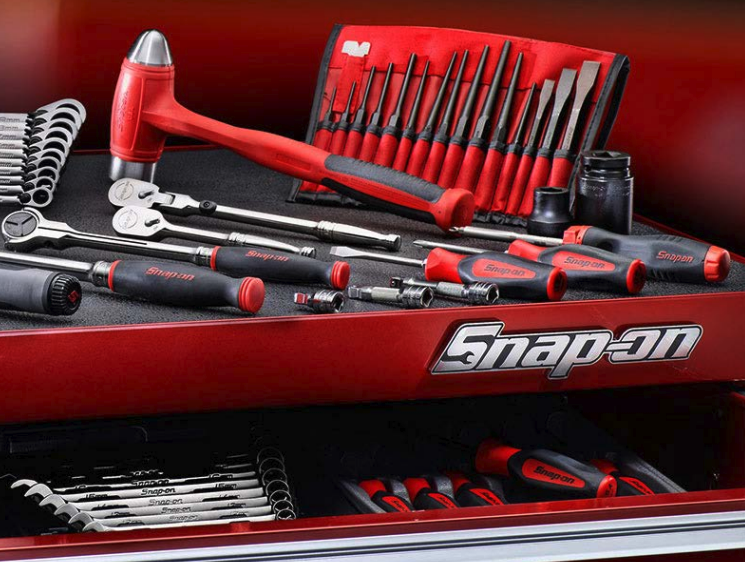
Snap-on Incorporated is a leading global innovator, manufacturer and marketer of tools, equipment, diagnostics, repair information and systems solutions for professional users performing critical tasks. The company's iconic red toolbox is recognized worldwide — a symbol of quality and reliability in professional mechanics' shops, automotive dealership service bays, and industrial facilities across the globe. Products and services are sold through the company's franchisee, company-direct, distributor and internet channels, reaching professional users in automotive, industrial, and specialty markets.
As an S&P 500 company listed on the New York Stock Exchange (ticker: SNA), Snap-on is headquartered in Kenosha, Wisconsin and has built a reputation for innovation and operational excellence that spans over a century. Behind the iconic brand is a sophisticated global supply chain that manages thousands of SKUs, multiple manufacturing facilities, complex distribution networks, and relationships with franchisees and distributors across six continents.
At a Glance
Industry
Professional Tools, Equipment & Diagnostics
Headquarters
Kenosha, Wisconsin
Company Size
S&P 500, NYSE-listed (SNA)
Methodologies
S&OP, CPFR, Strategic Sourcing, Hub & Spoke
Technology Optimized
lanning & Forecasting Systems, 3PL Integration
Engagement Type
Supply Chain & Transportation Optimization
The Challenge
Behind Snap-on's iconic brand was a supply chain that wasn't keeping pace. Material planning and distribution networks were causing warehouse congestion, excess inventory, and inefficient material handling. Inbound freight management was hemorrhaging money.The distribution network had grown organically over decades, with warehouses and shipping routes that reflected historical convenience rather than economic optimization. For a company with Snap-on's scale and reputation, this wasn't just inefficiency — it was leaving tens of millions of dollars on the table every year.
Key Results
- 4x increase in Earnings Per Share (2003-2013)
- $18M reduction in transportation spend
- $11M savings from strategic sourcing
- $20M additional cost savings in logistics and production
- $49M total combined supply chain savings
The Challenge
Snap-on is one of the most recognized brands in American industry — the red toolbox that every mechanic knows, the diagnostics equipment in every dealership service bay. But behind that iconic brand was a supply chain that wasn't keeping pace with the company's strategic ambitions. Material planning and distribution networks were causing warehouse congestion, excess inventory, and inefficient material handling across the company's network.
Inbound freight management was particularly acute. Poor annual load count management was driving excessive transportation spend — costing Snap-on $18 million annually in unnecessary freight charges. The distribution network had grown organically over decades, with warehouses and shipping reflected historical convenience rather than economic optimization. Meanwhile, material sourcing lacked the rigor needed to drive continuous cost improvement. These disconnected challenges compounded one another: poor planning drove excess inventory, which required more warehouse space and more transportation to move, which in turn drove higher costs and lower margins.
For a company with Snap-on's scale, brand reputation, and market position, this wasn't just operational inefficiency — it was leaving tens of millions of dollars on the table every year, and more importantly, it was preventing the company from achieving the operational discipline required to sustain growth and defend margin in an increasingly competitive global market.
Gray Matter Logic's supply chain practice brings the strategic discipline of top-tier management consulting with the operational intensity of hands-on implementation — a combination that has delivered over $230 million in measurable results at companies including Snap-on, Toro, Tennant, and MTS Systems.

The Approach
Gray Matter Logic was engaged to establish and manage a comprehensive Program Office for Supply Chain, Transportation, and Logistics Improvement — a multi-year, multi-phase transformation that would touch every aspect of Snap-on's physical supply chain operations. The engagement was structured around three integrated phases designed to build sequentially and compound impact.
Phase I focused on Strategic Sourcing and Improved Planning. Gray Matter Logic implemented a formalStrategic Sourcing Program with vendor performance reporting to improve Purchase Price Variance and on-time shipment metrics. Concurrent with sourcing improvements, the team led SKURationalization, established Sales & Operations Planning (S&OP) disciplines, and launched EnhancedPlanning initiatives to improve material availability and flow through the distribution network. This phase created the planning visibility needed for the transformation phases to follow.
Phase II tackled the transportation and distribution network itself. Gray Matter Logic designed and implemented a Hub and Spoke Network model that fundamentally restructured how product moved through Snap-on's distribution system — replacing a legacy, geographically inefficient network with a modern, economically optimized architecture. Cost per Hundred Weight was systematically driven down through optimized 3rd Party Logistics partnerships that leveraged Snap-on's consolidated volume for better economics. This network redesign freed capital, reduced transportation costs, and created the capacity for demand-driven execution.
Phase III introduced Collaborative Planning, Forecasting and Replenishment (CPFR) — a demand-driven approach that synchronized Snap-on's planning with actual customer demand patterns rather than historical forecast. CPFR transformed the company from a push-based planning model to a pull-based execution model, further reducing inventory while improving customer service levels. This three-phase approach was engineered so that improvements would compound: better planning fed better sourcing, which fed better transportation, which fed better customer service and margin.
OUR PROVEN FOUR-STEP INTEGRATION PROCESS
See what others miss.

1. Analyze
Conducted end-to-end supply chain diagnostic across procurement, warehousing, transportation, and distribution. Quantified the cost of poor material planning — excess inventory, warehouse congestion, and $18M in unnecessary transportation spend. Mapped distribution network for Hub and Spoke optimization opportunities.
Strip away what doesn't serve you.

2. Optimize
Implemented Strategic Sourcing Program with vendor performance measurement and continuous improvement discipline. Led SKU Rationalization and S&OP to improve material availability and reduce excess inventory. Designed Hub and Spoke Network to replace the legacy distribution structure with an economically optimized network.
Let the system do the work.

3. Automate
Deployed Collaborative Planning, Forecasting and Replenishment (CPFR) to synchronize demand with supply. Integrated 3rd Party Logistics partnerships for optimized cost per hundred weight. Built vendor performance reporting systems for continuous sourcing improvement.
Walk into the new world prepared.

4. Transition
Established sustainable supply chain management cadence and governance. Transferred Program Office disciplines to Snap-on's internal teams. Embedded continuous improvement practices that sustained and extended gains through 2013 and beyond.
Over a decade-long partnership, Gray Matter Logic's supply chain team became an embedded extension of Snap-on's operations — delivering $49 million in combined savings while helping drive a 4x increase in Earnings Per Share.

The Results

The decade-long partnership delivered results that would make any Fortune 500 board take notice. Total combined savings: $49 million —$18M from transportation optimization, $11M from strategic sourcing programs, and $20M from logistics and production improvements.But the most telling metric isn't a cost number— it's the 4x increase in Earnings Per Share from 2003 to 2013. While Gray Matter Logic's supply chain work was one contributor among many to that EPS growth, the correlation between the three phases of supply chain improvement and Snap-on's financial trajectory is unmistakable.
The impact went beyond cost reduction. By redesigning the distribution network with a Hub and Spoke model, Snap-on improved service levels while reducing transportation costs — fewer handoffs, faster velocity, better fill rates. Strategic sourcing didn't just save money — it improved supplier quality, reliability, and alignment with Snap-on's operational standards. S&OP and CPFR didn't just reduce inventory — they improved material availability and made the supply chain responsive to actual customer demand rather than forecast.
The improvements compounded over time: each phase created the conditions for the next phase to succeed. Better planning enabled better sourcing decisions. Better sourcing freed capital and improved supplier execution. Better planning and sourcing enabled network optimization that wouldn't have been possible with the old supplier and inventory mix. And better network design created the velocity and visibility required to deploy CPFR effectively. This virtuous cycle meant that the benefits of the transformation extended far beyond the original savings targets.
The transformation positioned Snap-on for sustained competitive advantage. The company went from managing supply chain as a cost center with historical inefficiencies to managing it as a strategic driver of margin and customer value. The net profit margin trajectory tells the story of a company that went from managing day-to-day supply chain firefighting to operating with the systematic operational discipline of a best-in-class global manufacturer.